 English
 русский
Drawing-based manufacturing
Diameter, height, wall thickness, bottom thickness, rim geometry and functional surfaces are evaluated individually.
Molybdenum crucibles manufactured to customer drawings for vacuum furnaces, evaporation systems, laboratory equipment and controlled-atmosphere high-temperature processing.
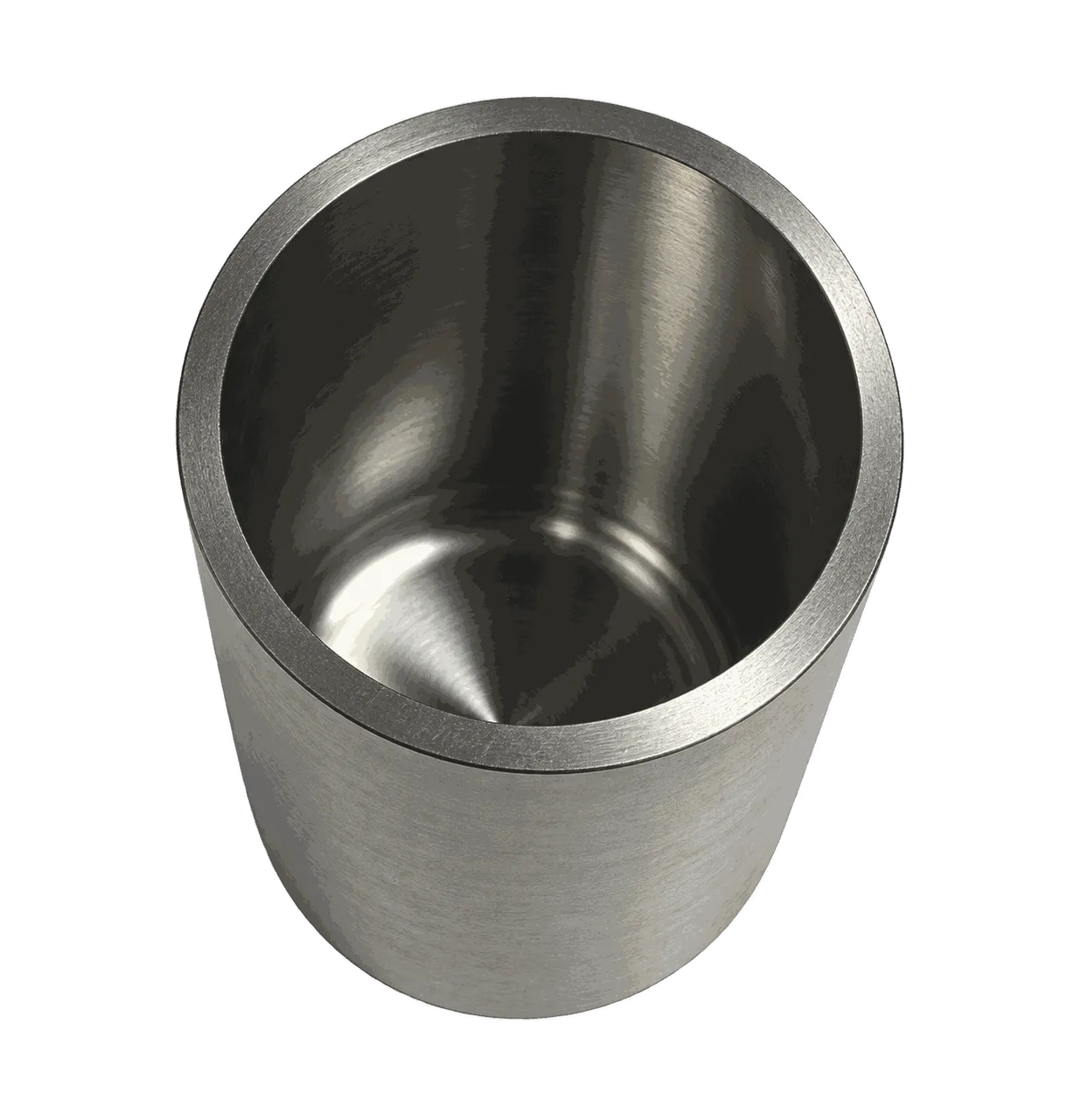
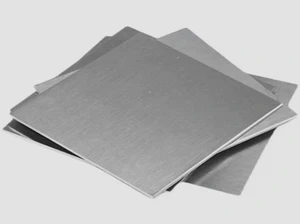
Aulister supplies custom molybdenum crucibles based on customer drawings, PDF files, STEP models or approved samples. Depending on geometry, wall thickness, quantity and service conditions, the crucible may be machined from solid material, produced from a sintered or forged blank, or formed from molybdenum sheet.
Material grade, dimensions, tolerances, surface condition, inspection requirements and operating environment are reviewed before quotation and production.
Send a drawing for review →Diameter, height, wall thickness, bottom thickness, rim geometry and functional surfaces are evaluated individually.
Commercially pure molybdenum is commonly considered, while TZM or other Mo alloys may be evaluated for specific requirements.
One-off prototypes, replacement crucibles, small batches and repeat orders can be reviewed.
Material certificates, dimensional inspection reports and agreed traceability records can be supplied when specified.
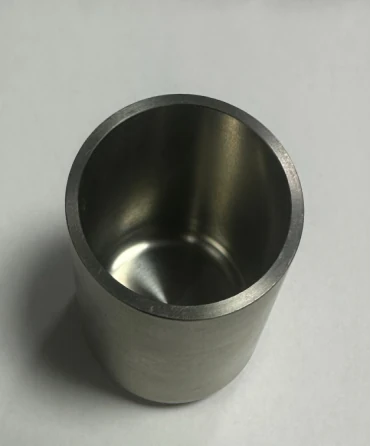
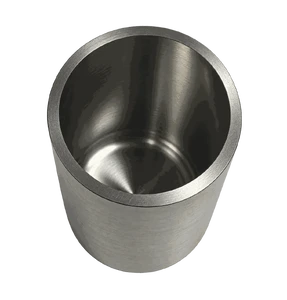
The photograph shows a cylindrical crucible with a thick wall, a flat machined rim, a closed flat bottom and a smooth internal cavity. The visible geometry is consistent with a machined crucible, but the photograph alone cannot confirm material purity, dimensions, tolerances, density, heat treatment or the original manufacturing route.
Manufacturing route depends on the required geometry, wall thickness, quantity and service conditions.
Suitable for thick walls, small or medium sizes, precise geometry and prototypes.
Confirm stock size, machining allowance, corner radii and material utilization.Suitable for larger sections or parts requiring a prepared blank.
Confirm blank availability, density, grain condition and final machining.Suitable for thinner walls and selected production quantities.
Confirm sheet thickness, draw depth, tooling and minimum corner radius.For stepped walls, flange rims, holes, grooves or special bottoms.
Drawing review, datum scheme and critical dimensions are required.Final material selection should follow the drawing, purchasing specification and service conditions.
| Material | General description | Information needed for RFQ |
|---|---|---|
| Pure molybdenum | Common choice for vacuum and controlled-atmosphere high-temperature components. A typical minimum purity of 99.95% may be specified, subject to the agreed material standard and certificate. | Purity, standard, product form and certificate requirements |
| TZM alloy | Molybdenum alloy that may be considered where higher strength or creep resistance is required. Suitability depends on temperature, load, geometry and atmosphere. | Service temperature, load, cycle, atmosphere and applicable specification |
| Other Mo alloys | Special grades can be reviewed when the customer drawing or purchasing specification identifies the exact grade. | Complete material designation and acceptance criteria |
The following items can be specified. Final manufacturability and tolerances are confirmed after drawing review.
| Parameter | Available option or drawing confirmation |
|---|---|
| Geometry | Straight-wall, tapered, stepped, flanged or other custom profiles |
| Dimensions | Outside diameter, inside diameter, height, wall thickness and bottom thickness to drawing |
| Machining | Turning, boring, milling, drilling, grinding and suitable finishing processes |
| Surface condition | As-machined, ground or polished on specified functional surfaces |
| Edges | Sharp-edge removal, chamfers or radii as shown on the drawing |
| Inspection | Material certificate, dimensional report and other agreed inspection records |
| Drawing formats | PDF with STEP or STP preferred; DWG, DXF and physical samples may also be reviewed |
| Quantity | Prototype, small batch and repeat-order requirements can be evaluated |
Application details help define material selection, geometry, inspection and quotation.
Crucibles and containers for heating, sintering and thermal processing under vacuum or an agreed protective atmosphere.
Source containers and evaporation components where process material, temperature and vacuum level are defined by the customer.
One-off crucibles and experimental containers for controlled thermal tests and material development.
Containers for powders, metals or compounds when chemical compatibility has been verified by the equipment designer or end user.
A useful molybdenum crucible inquiry should describe the complete geometry and service conditions rather than only stating the outside diameter and height.
This is a quotation template, not a completed delivery case.
There is no single temperature that applies to every crucible. The limit depends on atmosphere, load, contained material, geometry, thermal cycle and contamination requirements. Provide the full service conditions for review.
Molybdenum is generally selected for vacuum or protective-atmosphere high-temperature service. Prolonged use at elevated temperature in an oxidizing atmosphere is not recommended without application-specific evaluation.
A one-piece prototype or small batch can be evaluated. The quotation reflects raw-material availability, machining setup, inspection and documentation requirements.
A typical 99.95% minimum purity requirement can be reviewed. The final grade, test method and certificate must be defined in the purchase specification.
Send a dimensioned PDF drawing together with a STEP or STP model whenever available. Mark critical tolerances, datums, surface requirements and inspection points.
The customer or equipment designer should confirm compatibility between the crucible and the process material under the actual temperature, atmosphere and cycle. We can then evaluate manufacturing feasibility.
Send the drawing, material requirement, quantity and service conditions. We will review the manufacturing route and technical requirements before quotation.