 English
 русский
SEARCH
Core Dimensions: Preparation & Synthesis, Core Properties, Advantages & Disadvantages, Typical Applications, Price Range, Selection Logic
Price Reference (Industrial‑grade raw metal ingots, 2026 market quotation, for relative magnitude only; prices for high‑purity or deep‑processed products will rise substantially):
Titanium ≈ 20‑40 CNY/kg; Niobium ≈ 200‑400 CNY/kg; Molybdenum ≈ 400‑600 CNY/kg; Tantalum ≈ 4000‑7000 CNY/kg
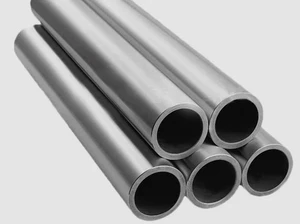
The mainstream Kroll process: Titanium ilmenite or rutile is converted into titanium tetrachloride, followed by magnesium thermal reduction to produce titanium sponge, which is then melted, forged and rolled into finished products. Calcium thermal reduction and electrochemical reduction are alternative routes. Titanium smelting consumes large amounts of energy, yet titanium resources are abundant with the largest‑scale industrial production. Mature supply chains are available for titanium plates, tubes and forgings.
Density: 4.51 g/cm³ (about half that of steel); Melting point: 1668 °C. High strength‑to‑weight ratio; stable mechanical performance from ‑196 °C to 500 °C. Self‑healing surface oxide film provides good resistance to seawater, wet chlorine and dilute acids & alkalis. Excellent biocompatibility. Not resistant to hydrofluoric acid, concentrated or high‑temperature strong acids.
Balanced lightweight performance and mechanical strength; good corrosion resistance against chloride ions and seawater; favorable low‑temperature toughness; well‑established medical‑grade applications; best cost‑performance among the four metals; mature machining and welding processes.
Prone to hydrogen‑, oxygen‑ and nitrogen‑induced embrittlement above 500 °C; poor resistance to concentrated sulfuric acid, concentrated hydrochloric acid and hydrofluoric acid. Titanium alloys are difficult to machine and tend to cause tool‑built‑up‑edge.
Aerospace structural components and cold‑end engine parts; seawater desalination, offshore platforms, chemical‑industry equipment for dilute‑acid service; dental implants, orthopedic bone plates; high‑end sports equipment, new‑energy‑industry hardware, pressure vessels.
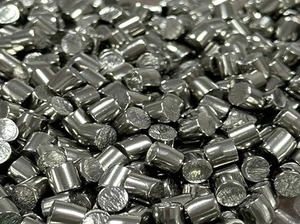
Niobium occurs together with tantalum in niobium‑tantalum ores. Solvent extraction separates niobium from tantalum. Sodium thermal reduction of potassium‑sodium fluoroniobate yields niobium powder, which is shaped via powder metallurgy and electron‑beam melting. Brazil is the world’s major raw‑material supplier. China boasts strong deep‑processing capacity yet relies heavily on imported raw ores.
Density: 8.57 g/cm³; Melting point: 2468 °C. Core superconducting material (NbTi, Nb₃Sn). High ductility suitable for cold working; resistant to most dilute acids; moderate thermal‑expansion coefficient; low neutron‑absorption cross‑section.
Irreplaceable superconducting properties; excellent ductility for manufacturing foils and fine wires; better corrosion resistance than ordinary stainless steel; serves as a β‑stabilizer for titanium alloys and high‑temperature alloys; favorable compatibility for nuclear‑industry applications.
Much higher price than titanium; rapid oxidation in air above 400 °C; low standalone structural strength, rarely used as load‑bearing components; scarce mineral resources.
Superconducting magnets for MRI systems, superconducting coils for accelerators; additive for aerospace high‑temperature alloys; superconducting quantum devices; corrosion‑resistant chemical‑process equipment, nuclear‑industry components; high‑end low‑modulus Ti‑Nb medical alloys.
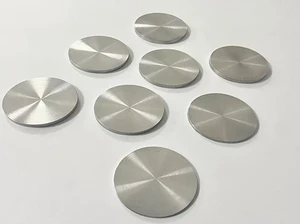
Tantalum is co‑mined with niobium. After separation, tantalum powder is obtained by sodium reduction, followed by powder metallurgy and electron‑beam melting. Manufacturing processes for high‑purity tantalum targets and capacitor‑grade tantalum powder face extremely high technical barriers. Fluctuations in overseas raw‑material supply render tantalum a strategic metal.
Density: 16.65 g/cm³; Melting point: 2996 °C. Outstanding corrosion resistance, tolerating nearly all concentrated acids at ambient temperature (including concentrated sulfuric acid and aqua regia). Its oxide film exhibits an ultra‑high dielectric constant. Top‑tier biocompatibility; porous tantalum enables bone ingrowth; superior ductility.
World‑class resistance to strong acids among metals; optimal volumetric‑to‑capacitance ratio for tantalum capacitors; superior bone‑integrating capability compared with titanium; good vacuum gettering performance; indispensable barrier‑layer material in semiconductors to block copper diffusion.
Prohibitively high cost; high density leading to heavy weight; severe oxidation in air at elevated temperatures; volatile raw‑material supply and high supply‑chain risks.
Tantalum capacitors for AI servers, military‑grade electronics and 5G hardware; tantalum sputtering targets for 7 nm / 3 nm semiconductors; reactors and heat exchangers for highly corrosive chemical media; high‑end porous orthopedic implants; aerospace high‑temperature alloys, vacuum electronic devices.
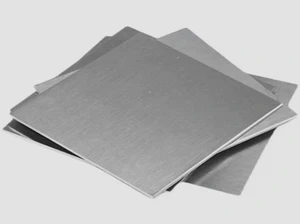
Most molybdenum is recovered as a by‑product from copper ores. Roasting produces molybdenum trioxide, which is reduced with hydrogen to molybdenum powder. The mainstream production route comprises powder‑metallurgy sintering and hot working. China holds the world’s largest molybdenum reserves with a complete industrial chain. TZM molybdenum alloy is the most widely‑used modified grade.
Density: 10.28 g/cm³; Melting point: 2623 °C. Low thermal‑expansion coefficient well‑matched with silicon. Retains high strength above 1600 °C under vacuum or inert‑atmosphere conditions. Good thermal and electrical conductivity; resistant to corrosion by molten glass and liquid metals.
Excellent ultra‑high‑temperature performance under vacuum; low thermal‑expansion ensures dimensional stability; preferred material for semiconductor targets and heat sinks; substantially lower price than tantalum; stable domestic supply chain.
Under atmospheric conditions, rapid oxidation occurs above 600 °C forming volatile MoO₃; high‑temperature service requires vacuum or protective atmosphere. Pure molybdenum shows room‑temperature brittleness and is difficult for plastic forming at ambient temperature. Poor biocompatibility, not suitable for direct human‑body implantation.
Semiconductor sputtering targets, heat sinks and carrier trays; heating elements and heat‑shielding screens for vacuum furnaces; electrodes for glass melting; X‑ray anode targets; high‑temperature dies, aerospace hot‑end components; alloying additive for steelmaking.
| Material | Core Strengths | Critical Drawbacks | Best‑Fit Scenarios | Price Tier |
|---|---|---|---|---|
| Ti (Titanium) | Lightweight, seawater/chloride‑resistance, mature medical applications | Poor resistance to concentrated strong acids; embrittlement at high temperature | Aerospace, marine engineering, general medical implants, conventional chemical processes | Lowest |
| Nb (Niobium) | Superconductivity, high ductility, nuclear‑field compatibility | High‑temperature oxidation; low standalone mechanical strength | Superconducting magnets, alloy modification, nuclear‑industry equipment | Medium‑high |
| Ta (Tantalum) | Extreme strong‑acid resistance, high dielectric property, favorable bone‑integration | Exorbitant price, high density, supply volatility | Tantalum capacitors, sub‑7 nm semiconductors, highly‑corrosive chemical processes, premium implants | Very high |
| Mo (Molybdenum) | Ultra‑high‑vacuum‑temperature performance, low thermal expansion, silicon‑compatible | Severe oxidation above 600 °C in air; room‑temperature brittleness | Semiconductor heat sinks / targets, vacuum high‑temperature furnaces, glass‑manufacturing industry | Medium‑high |
Prioritize lightweight construction, seawater/salt‑fog resistance, cost constraints and standard implants → Choose Titanium
Superconducting magnets, accelerators, low‑modulus medical alloys, nuclear‑related working conditions → Choose Niobium
Concentrated & high‑temperature strong‑acid media, high‑performance tantalum capacitors, sub‑7 nm semiconductor barrier layers, bone‑integrating implants → Choose Tantalum
Ultra‑high‑temperature service under vacuum / inert atmosphere, semiconductor carrier trays / targets, silicon‑matched thermal‑expansion, glass melting → Choose Molybdenum
Exclusion Guidelines:
Long‑term service in air above 600 °C: Avoid Molybdenum
Hydrofluoric‑acid / fluoride‑containing media: None of these four metals are suitable; select Zirconium instead
Cost‑sensitive projects with corrosive conditions: Titanium as first option; upgrade to tantalum if budget permits
General load‑bearing structural parts: Titanium is preferred; niobium and tantalum are seldom adopted as primary load‑bearing structures
Niobium and tantalum are frequently confused: Select niobium for superconductivity applications; select tantalum for strong‑corrosion environments and capacitor manufacturing.
Molybdenum cannot be deployed under atmospheric high‑temperature conditions without coatings or protective atmosphere — this is a common pitfall for end‑users.
Medical‑use scenarios: Titanium satisfies requirements for conventional dental implants; porous tantalum is considered only for bone‑ingrowth‑demanding heavy‑load bone repair.