 English
 русский



SEARCH
The titanium rod price is mainly determined by the titanium grade, rod diameter and length, required quantity, manufacturing standard, surface condition, dimensional tolerance, testing documents, and additional machining. There is no single market price that applies to every titanium rod because a standard Grade 2 round bar and a precision-machined Grade 5 component involve different materials, production steps, and inspection requirements.
For buyers, this means that asking only, “What is your titanium rod price per kilogram?” may not produce a useful quotation. A low price may exclude machining, testing, packaging, or delivery, while a higher quotation may already include tighter tolerances and complete material documentation.
The best way to compare quotations is to provide the same technical requirements to each supplier and review what is included—not just the final number.
Titanium rods are supplied for applications ranging from general chemical processing equipment to aerospace, medical, marine, oil and gas, and industrial components. Each application may require a different titanium grade, standard, surface condition, tolerance, and level of documentation.
A supplier therefore needs more information than the total order weight before confirming a price.
For example, the following products may all be described as titanium rods:
A commercially pure Grade 1 rod for forming
A Grade 2 round bar for corrosion-resistant industrial equipment
A Grade 5 Ti-6Al-4V bar for a high-strength component
A Grade 12 rod for a specialized corrosive environment
A medical-grade bar requiring specific certification
A custom-machined rod with threads, holes, or stepped diameters
Although they share the same general product form, their material and processing costs are not identical.
Titanium itself also requires more energy-intensive extraction and processing than common structural metals such as iron. It is normally selected where properties such as low density, corrosion resistance, strength-to-weight performance, or biocompatibility justify the additional material cost.
Instead of looking for one universal number, buyers should understand which specifications have the greatest effect on the quotation.
Several variables influence the final cost. Some affect the raw material value, while others increase forging, machining, testing, handling, or logistics expenses.
The selected grade is one of the first factors a supplier considers.
Commercially pure titanium grades, such as Grade 1 and Grade 2, are commonly chosen for corrosion resistance and fabrication requirements. Alloy grades, such as Grade 5 Ti-6Al-4V, contain additional alloying elements and are selected when higher strength is needed.
Specialized grades may have more complex raw material, melting, forging, heat-treatment, or inspection requirements. As a result, buyers should not assume that all titanium grades will have the same price per kilogram.
Aulister’s titanium rod range includes commonly requested options such as Grade 1, Grade 2, Grade 5, and Grade 12, along with products manufactured to standards including ASTM, ASME, AMS, MIL, JIS, and ISO requirements.
When requesting a quotation, state the complete grade rather than writing only “pure titanium” or “titanium alloy.” For Grade 5, for example, it is helpful to specify Ti-6Al-4V and the applicable standard.
The dimensions of the rod affect both material usage and production availability.
Standard diameters that are regularly manufactured or held in inventory may be easier to supply. An unusual diameter can require a new production run, additional forging, drawing, peeling, grinding, or machining.
Length also matters. Long titanium rods can create challenges involving:
Production equipment capacity
Straightness control
Surface finishing
Inspection
Packaging
International transportation
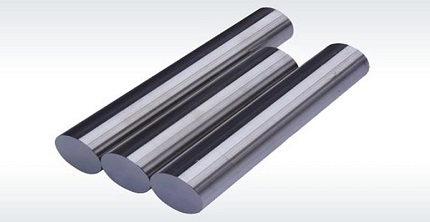
Aulister lists titanium round bars in diameters ranging from approximately 0.125 inches to 12 inches, or 3.175 mm to 304.8 mm, with custom dimensions available for specific projects.
A buyer ordering a common diameter and standard length may receive a different price from a buyer requesting a non-standard diameter, unusually long rod, or small custom-cut pieces.
Quantity affects more than the total material weight.
Manufacturing a titanium rod order may involve production scheduling, equipment setup, cutting, surface preparation, inspection, documentation, and packaging. Many of these activities are required whether the order contains one rod or fifty rods.
For a small order, setup and handling costs are divided across fewer pieces. For a larger order, those costs may be distributed across a greater quantity, which can reduce the unit price.
However, a larger order does not automatically guarantee a lower price per kilogram. The result also depends on:
Whether the material is available from stock
Whether a new production batch is required
The total diameter and length combination
The required delivery schedule
Inspection and certification requirements
Packaging and transport limitations
For repeat purchases, buyers may obtain better pricing and more stable delivery by discussing forecast demand or annual volume with the supplier.
The required standard can influence the material chemistry, mechanical properties, production route, heat-treatment condition, testing, and documentation.
A general industrial rod supplied according to a basic commercial specification may cost less than material requiring aerospace or medical documentation.
Depending on the project, buyers may request:
Material test certificates
Chemical composition reports
Mechanical property reports
Heat or batch numbers
Dimensional inspection reports
Ultrasonic testing
Microstructure examination
Third-party inspection
Country-of-origin documentation
Full manufacturing traceability
These documents provide valuable quality assurance, but they also require testing, record management, and sometimes external inspection fees.
Buyers should therefore state documentation requirements during the initial inquiry. Requesting additional reports after production may increase the cost or delay delivery.
Titanium rods can be supplied with different surface conditions, including forged, rolled, peeled, ground, polished, or machined finishes.
A standard mill-finished rod generally requires fewer processing steps than a centerless-ground rod with a tight diameter tolerance and controlled surface roughness.
Price may increase when the order requires:
Tight diameter tolerance
High straightness
Precise roundness
Controlled surface roughness
Polishing
Centerless grinding
Defect removal
Special cleaning
Protective surface handling
It is important to specify only the tolerance and surface finish that the application genuinely needs. An unnecessarily tight tolerance can increase machining time, inspection requirements, material removal, and rejection risk.
Some buyers need finished or semi-finished parts rather than standard titanium bars.
Additional operations may include:
Cutting to exact lengths
Turning
Threading
Drilling
Milling
Chamfering
Tapering
Step machining
Heat treatment
Welding or assembly
These services change the quotation from a raw-material price into a manufactured-component price.
Two suppliers may quote the same rod at a similar material rate but provide very different totals because one includes cutting and machining while the other supplies full-length mill material only.
The table below provides a practical comparison of several common titanium rod grades. The price descriptions are relative rather than fixed because actual quotations depend on dimensions, quantity, standards, availability, and market conditions.
| Titanium Grade | General Characteristics | Typical Purchasing Considerations | Potential Price Effect |
|---|---|---|---|
| Grade 1 | Commercially pure titanium with high ductility | Selected for forming, corrosion resistance, and applications requiring a softer titanium grade | Price depends heavily on size, availability, and certification |
| Grade 2 | Commercially pure titanium with a balance of strength, corrosion resistance, and formability | Widely considered for chemical, marine, industrial, and fabrication projects | Often used as a reference grade when comparing commercially pure titanium rod prices |
| Grade 5 | Ti-6Al-4V alloy offering higher strength than commercially pure grades | Commonly requested for aerospace, engineering, medical, and high-performance components | Alloy content, processing, heat treatment, and certification may increase the price |
| Grade 12 | Titanium alloy containing nickel and molybdenum | Considered for specialized corrosion-resistant applications | Lower production volume and specialized alloy requirements may affect availability and cost |
| Grade 23 | Extra-low-interstitial Ti-6Al-4V | Frequently associated with demanding medical or aerospace requirements | Certification, cleanliness, traceability, and testing can increase the final quotation |
The lowest-priced grade is not necessarily the most economical choice.
Selecting a cheaper material that does not meet the required mechanical, corrosion, fabrication, or regulatory conditions can result in premature failure, rework, or rejected components. Grade selection should therefore be based on the operating environment and engineering requirements before price comparisons begin.
An accurate quotation begins with a complete request for quotation, or RFQ. The more clearly the requirements are stated, the easier it is to compare suppliers on an equal basis.
A useful RFQ should include:
Titanium grade or alloy designation
Applicable ASTM, AMS, ASME, ISO, or other standard
Diameter
Length
Quantity or total weight
Required material condition
Surface finish
Dimensional tolerance
Straightness requirement
Testing and certification requirements
Machining or cutting instructions
Packaging requirements
Delivery destination
Required delivery date
When possible, attach a technical drawing. A drawing reduces the risk of misunderstanding dimensions, tolerances, edge conditions, and machining features.
The terms “titanium rod” and “titanium round bar” are often used interchangeably in commercial inquiries. However, buyers should still explain whether they require:
Full-length mill bars
Cut-to-length rods
Precision-ground bars
Forged billets
Small-diameter rods
Machined components
This distinction helps the supplier determine the correct production route and prevents a raw-material quotation from being compared with a finished-part quotation.
Providing a short application description can help the supplier identify missing requirements.
For example, stating that the rod will be used for a chemical-processing component may lead to questions about corrosion conditions and material grade. A medical application may require closer discussion of standards, traceability, surface condition, and inspection.
You do not need to disclose confidential design details. A brief explanation of the industry, operating environment, and manufacturing process is usually sufficient.
Instead of requesting only a final total, ask the supplier to clarify whether the quotation includes:
| Cost Item | Question to Confirm |
|---|---|
| Raw titanium material | Is the quoted grade and standard clearly stated? |
| Cutting | Are cut lengths included, or will full bars be supplied? |
| Machining | Are turning, drilling, threading, or polishing included? |
| Testing | Which inspections and reports are included? |
| Packaging | Is export packaging included in the price? |
| Freight | Is shipping included, and under which Incoterm? |
| Taxes and duties | Are import duties, local taxes, or customs charges excluded? |
| Minimum order | Is there a minimum order quantity or minimum invoice value? |
| Lead time | Does the quoted delivery time begin after payment or drawing approval? |
| Quote validity | How long will the price remain valid? |
This breakdown makes it easier to identify why one quotation is higher or lower than another.
A quotation with the lowest number is not always the lowest total-cost option. Buyers should compare technical compliance, usable material, documentation, lead time, and delivery risk.
A Grade 2 quotation should not be directly compared with a Grade 5 quotation. Similarly, material supplied to a basic commercial specification should not be compared with rod requiring aerospace-level testing and traceability.
Check that every supplier has quoted:
The same grade
The same standard
The same material condition
The same dimensions
The same tolerance
The same certification package
An unclear quotation should be clarified before a supplier is selected.
Some quotations are based on theoretical weight, while others use actual shipping weight. Additional material may also be included as machining allowance.
Ask whether the quoted diameter and length are final dimensions or production dimensions. A bar supplied oversized for later machining may weigh more and have a higher total cost, even when the price per kilogram is similar.
Titanium rod price comparisons can change significantly after freight is added, particularly for long or heavy bars.
International shipping costs may depend on:
Bar length
Total shipment weight
Wooden case dimensions
Air or sea transport
Destination
Customs requirements
Incoterm
Delivery urgency
Long bars may be more difficult and expensive to transport than shorter cut lengths. In some projects, ordering pre-cut material can reduce freight or local processing costs, although the supplier’s cutting fees must also be considered.
Delayed delivery, incorrect certification, damaged packaging, or out-of-tolerance material can cost more than a small difference in the initial purchase price.
Before placing a large order, review whether the supplier can provide:
Clear material specifications
Batch traceability
Relevant inspection reports
Drawing confirmation
Production photographs
Suitable export packaging
Realistic lead times
Technical communication
Support for repeat orders
A sample or trial order may be appropriate when purchasing a new grade, custom size, or precision-machined rod from a new supplier.
Buyers cannot control every raw-material or market change, but they can reduce unnecessary costs through better specification and purchasing decisions.
Standard diameters and lengths are generally easier to source than unusual dimensions. Before specifying a custom size, determine whether a standard bar can be machined to the required finished dimension.
The material removal must still be considered, but using an available size may reduce production lead time.
Apply precision tolerances only to functional dimensions. A general structural section may not need the same diameter tolerance or surface finish as a precision shaft.
Working with the engineering team to separate critical and non-critical features can reduce grinding, inspection, and rejection costs.
When several departments or projects need similar titanium material, consolidating purchases may reduce setup, testing, packaging, and freight costs.
For recurring requirements, provide the supplier with an estimated annual quantity. This can help with material planning even when the full volume is not purchased in one shipment.
The most useful purchasing calculation is not always price per kilogram. Consider:
Material cost
Cutting loss
Machining allowance
Testing fees
Packaging
Freight
Import charges
Local machining
Rejection risk
Delivery time
Inventory cost
A slightly higher material price may be justified when the supplier provides cut-to-length pieces, complete documentation, reliable dimensions, and faster delivery.
The cost depends on its grade, diameter, length, quantity, standard, tolerance, surface finish, certification, machining, and delivery terms. Because these variables differ from project to project, suppliers normally require a detailed specification before providing an accurate quotation.
There is no universal titanium rod price per kilogram. Grade 2, Grade 5, medical-grade titanium, standard mill bars, and precision-ground rods may all have different prices. The quoted rate can also change with order quantity, raw-material availability, testing requirements, and freight.
Grade 5 and Grade 2 have different compositions, manufacturing requirements, mechanical properties, and applications. Grade 5 may carry a higher cost in many quotations because it is an alloy and may require additional processing or certification. However, actual prices depend on size, quantity, standard, and availability.
A larger diameter normally increases the weight per unit length, which raises the total material cost. Large-diameter rods may also require more demanding forging, heat treatment, machining, inspection, and transport. The price per kilogram, however, does not necessarily increase at the same rate as the total order value.
Custom rods may require non-standard raw material, special production scheduling, additional forging or machining, tighter tolerances, surface finishing, dedicated inspection, or small-batch setup. These costs must be divided across the ordered quantity, so small custom orders often have a higher unit cost.
Yes. Length affects total weight, production capability, straightness control, cutting, packaging, and transportation. Very long bars can be more expensive to manufacture and ship, while short cut pieces may involve additional cutting and handling fees.
Provide the grade, standard, diameter, length, quantity, tolerance, surface condition, material condition, testing documents, machining requirements, delivery destination, and required date. A technical drawing should be included for custom or machined parts.
Larger orders may reduce the unit cost because production setup, testing, and packaging expenses can be distributed across more material. The final result still depends on grade, dimensions, production route, lead time, and raw-material availability.
No. Buyers should also compare material standards, dimensions, tolerances, testing, documentation, machining, packaging, freight, delivery time, and supplier reliability. A lower price per kilogram may not represent a lower total delivered or usable-material cost.
Buyers can review available grades, standards, dimensions, and custom options on Aulister’s titanium rod price page. To obtain an accurate quotation, submit the required grade, diameter, length, quantity, standard, surface condition, certification, and delivery destination.