 English
 русский
SEARCH
The recent investment boom in niobium and tantalum ingots is far more than a short-term speculative trend; it reflects profound shifts in global industrial demand, strategic resource valuation, and the direction of technological innovation. As critical refractory metals, niobium and tantalum ingots have become the focus of institutional and private investors alike, and this enthusiasm reveals three core signals about the current global economic and industrial landscape.
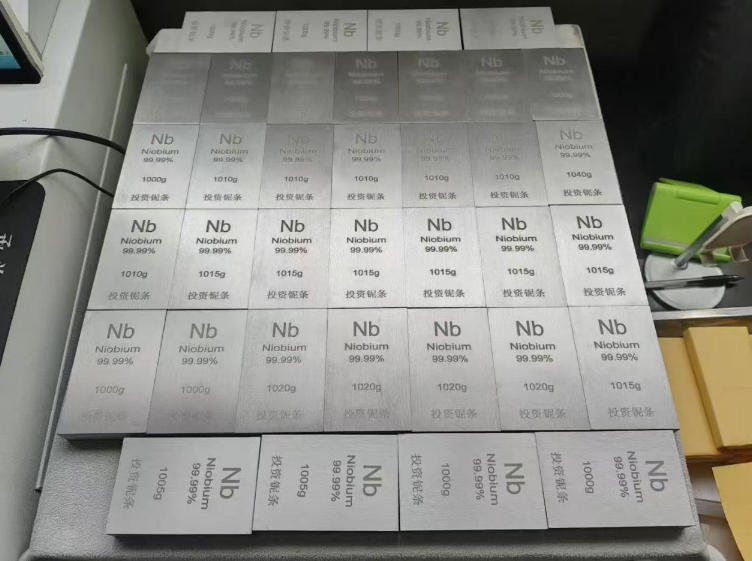
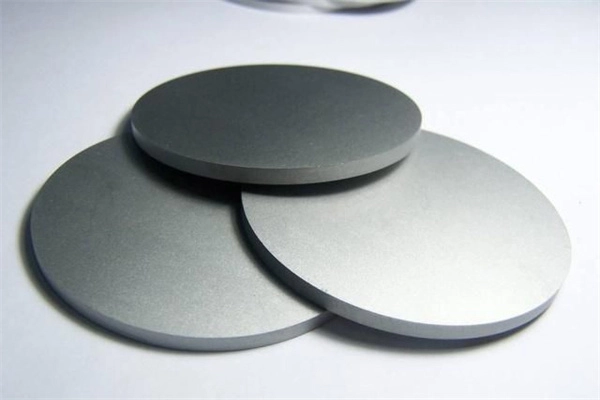
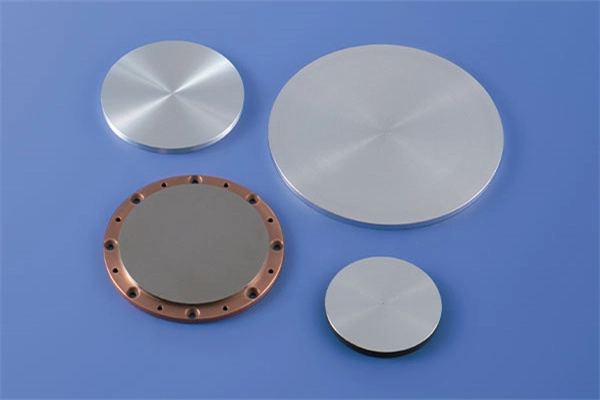
First, the boom underscores the irreplaceable role of niobium and tantalum in the upgrading of high-end industries. Niobium ingots, with their excellent high-temperature stability, superconductivity, and alloy strengthening properties, are indispensable in steel microalloying, controlled nuclear fusion, and aerospace high-temperature components — 90% of global niobium is used to enhance the strength and corrosion resistance of steel, while its application in superconducting cavities for nuclear fusion devices is driving long-term demand growth. Tantalum ingots, meanwhile, are critical to AI servers, semiconductors, and military industries, with their high dielectric constant and corrosion resistance making them ideal for high-performance tantalum capacitors and 12-inch semiconductor targets, as the AI boom and advanced semiconductor process iteration push demand to new heights. This surge in investment directly mirrors the market’s recognition of their irreplaceable value in emerging strategic industries.
Second, the investment frenzy highlights the structural imbalance between global supply and demand, which has become a key driver of value appreciation. Globally, niobium supply is highly monopolized, with a single Brazilian company controlling over 80% of global output, and China’s external dependence on niobium exceeding 95% — the long 5-8 year expansion cycle and tightening export policies in resource-rich countries ensure a long-term tight supply balance. For tantalum, global annual output is only about 2,500 tons, mainly concentrated in the Democratic Republic of the Congo, and a 2026 mine shutdown in the country is expected to widen the supply gap to around 20%. With both metals in historical low inventory and inelastic supply, the market has clearly priced in the long-term value of this supply-demand mismatch, attracting investors seeking stable returns amid market volatility.
Third, the boom signals a global revaluation of strategic mineral assets and the acceleration of domestic substitution. As niobium and tantalum are included in the list of strategic minerals by major countries, policy support and capital influx have promoted their valuation shift from "cyclical commodities" to "growth assets". Technological breakthroughs have further boosted their investment value: advances in separation and purification technologies have reduced recycling costs, while domestic enterprises have broken foreign monopolies in high-purity tantalum targets and superconducting niobium materials, enhancing the profitability and investment attractiveness of the industrial chain. Additionally, the rise of recycled resources is easing supply pressures and extending the upward cycle, making niobium and tantalum ingots more attractive as long-term strategic investment assets short-term speculative targets.
In essence, the investment boom in niobium and tantalum ingots is a market response to the dual drivers of industrial upgrading and supply constraints. It reflects investors’ long-term optimism about the future of high-end manufacturing, new energy, and semiconductor industries, as well as their recognition of the strategic value of critical minerals in a volatile global geopolitical environment. For investors, this boom is not a fleeting opportunity but a window to participate in the development of the global strategic metal industry, with niobium ingots offering steady long-term growth and tantalum ingots providing high short-term elasticity — a combination that makes them a compelling allocation in diversified portfolios.
By the way, we also have a large stock of smelted niobium, which can be processed into niobium ingots. The price of smelted niobium is more favorable. Friends in need, please feel free to contact us. Thank you.