 English
 русский
SEARCH
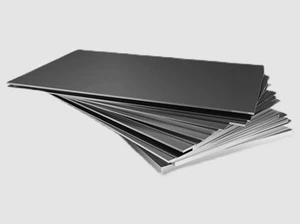
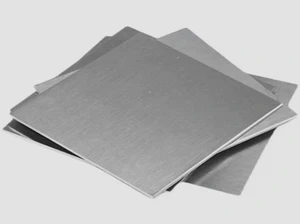
In the field of material science, GR7 titanium alloy sheet has garnered widespread attention across the engineering industry. Differing from commercially pure titanium and conventional titanium alloys, GR7 is a specialized titanium-palladium alloy developed through precise alloying processes. Its core performance advantage stems from the addition of approximately 0.2% palladium, which fundamentally optimizes the surface interfacial properties of titanium in harsh working environments. This subtle microstructural adjustment is the key reason why the alloy delivers exceptional and reliable performance in diverse extreme engineering applications.
The unique performance of GR7 titanium alloy originates from its distinctive micro-corrosion resistance mechanism centered on palladium elements. Pure titanium relies on a dense surface oxide film to resist external corrosion, yet this protective layer tends to become fragile and unstable in strongly reductive, oxygen-deficient, and acidic local environments, leaving the base metal vulnerable to pitting and crevice corrosion.
As a precious metal with a much higher standard electrode potential than titanium, palladium is dispersed evenly throughout the GR7 alloy matrix. When tiny surface defects or local erosion break the original oxide film and expose the titanium substrate, the dispersed palladium and titanium instantly form a micro-galvanic couple. Serving as a stable cathode, palladium accelerates the passivation reaction of the exposed titanium anode region and speeds up the reconstruction of a dense, intact protective oxide layer.
This self-catalytic repassivation capability enables GR7 titanium alloy to maintain stable passivation status long-term. Unlike ordinary titanium alloys that are prone to localized corrosion in harsh media, GR7 effectively avoids pitting, crevice corrosion and other common corrosion failures, achieving superior anti-corrosion durability in complex and aggressive environments.
Thanks to its outstanding active passivation and anti-corrosion properties, GR7 titanium sheet has become a preferred material for deep-sea extreme environment applications. The deep sea features extremely complex and non-uniform water conditions, especially around submarine hydrothermal vents, where seawater contains high concentrations of hydrogen sulfide, chloride ions, and presents low pH values, high temperature and high pressure. These harsh parameters pose severe corrosion threats to most conventional engineering materials.
GR7 titanium sheet perfectly adapts to such rigorous deep-sea working conditions. Its stable passive film and palladium-enhanced repassivation ability allow it to withstand long-term erosion from high-temperature, high-pressure, high-chloride and reductive seawater media. It is widely adopted for core components of deep-sea exploration equipment, including pressure-resistant housings for deep-sea detectors, subsea pipeline systems, and scientific sampling devices. The material ensures long-term structural integrity of key equipment throughout the service cycle, while preventing corrosion byproducts from leaking and polluting the fragile deep-sea ecological environment or interfering with precision scientific detection data.
Beyond deep-sea engineering, GR7 titanium alloy also demonstrates remarkable adaptability to extreme aerospace environments, especially the drastic temperature fluctuations and atomic oxygen erosion in low Earth orbit (LEO). Space equipment operates in alternating environments of intense solar radiation and complete Earth shadow, resulting in extreme cyclic temperature changes that easily cause structural deformation and performance attenuation of ordinary materials.
GR7 titanium sheet inherits the excellent characteristics of titanium alloys, including a low thermal expansion coefficient and high specific strength, ensuring stable structural dimensions during frequent thermal cycling. More importantly, the palladium-containing composite oxide layer formed on its surface provides exceptional resistance to atomic oxygen erosion. Atomic oxygen, a highly active substance generated by solar ultraviolet radiation decomposing oxygen molecules in low orbit, is the primary cause of surface aging and damage for most organic materials and common metal components in aerospace equipment.
The stable protective film on GR7 titanium alloy can significantly slow down atomic oxygen erosion, effectively maintaining the integrity and stable surface properties of aerospace parts during long-term on-orbit operation. This unique advantage makes it an indispensable structural material for long-life spacecraft components.
Although the application scenarios span deep-sea high-pressure environments and space high-vacuum orbits with vastly different external conditions, the core advantage of GR7 titanium alloy remains consistent: excellent stability in non-standard oxidative environments. Both reductive acidic deep-sea brine and high-activity atomic oxygen space environments break the ideal oxidation conditions for conventional passive metals, easily destroying the static protective oxide film of ordinary titanium materials.
Different from regular titanium alloys that only depend on initially formed static oxide films for protection, GR7 titanium sheet is engineered with a dynamic, active self-repairing passivation mechanism. It can actively repair damaged protective layers in real time when facing local environmental changes and corrosion risks, providing reliable performance redundancy for equipment operating in marginal and harsh environments.
In summary, the technical value of GR7 titanium alloy lies in its innovative material design logic: optimizing macroscopic environmental adaptability through precise microscopic alloy modification. It is not an all-purpose material, but a highly reliable specialized solution for extreme working conditions where traditional passivated metals fail to function properly, especially for complex corrosive and erosive environments that challenge conventional material limits.
With the continuous exploration of human engineering in deep sea, aerospace and other extreme fields, high-performance functional materials represented by GR7 titanium alloy are being further optimized and widely applied, providing solid material support for the development of cutting-edge extreme environment engineering technology.