 English
 русский

SEARCH
As global marine engineering pushes into deeper waters and more challenging environments, material selection has never been more critical. For offshore oil and gas platforms, subsea equipment, seawater desalination systems, and naval vessels, conventional materials like steel and copper alloys are struggling to keep up—frequent failures, high maintenance costs, and corrosion-related downtime are costing the industry billions annually.
That is where titanium comes in.
Titanium offers a combination of properties that no other structural metal can match in marine service:
Unmatched Corrosion Resistance. Titanium is virtually immune to seawater corrosion, thanks to a self-healing titanium dioxide (TiO₂) passive film that forms instantly upon exposure to oxygen-13. While stainless steel piping systems may require replacement within 5 years and copper-nickel alloys fail within 8 years in seawater service, titanium remains serviceable for decades with negligible material loss-3. In high-velocity erosion tests, titanium withstood flow speeds of up to 36 m/s—far surpassing the 6–9 m/s safe limit for stainless steel-13.
Lightweight & High Strength. With a density of just 4.51 g/cm³—only 57% that of steel—titanium delivers an exceptional strength-to-weight ratio that reduces structural weight by 30% to 40%-3. This weight reduction translates directly into lower platform loading, easier offshore installation, and reduced transportation costs. In one Norwegian project, a 200-meter seawater line using thin-wall titanium pipe weighed so little that a single worker could handle a 6-meter length unassisted-8.
Long Lifecycle Economy. Yes, titanium has a higher upfront cost—typically 3–5 times that of stainless steel. But over a 30-year design life, maintenance-free titanium systems reduce overall lifecycle costs by approximately 45%-3. Offshore replacement costs are 27 times higher than similar onshore work-8. Specifying titanium at the outset eliminates costly shutdowns, repairs, and replacements.
Beyond Steel & Copper. Titanium resists biofouling in low-flow conditions, has no risk of microbiologically influenced corrosion (MIC), and withstands hydrogen sulfide (H₂S), carbon dioxide (CO₂), and chloride concentrations up to 100,000 ppm-3-13. It remains non-magnetic—critical for stealth naval applications—and performs reliably across a wide temperature range.
The marine applications of titanium continue to expand rapidly. Key areas include:
Offshore Oil & Gas: Seawater cooling systems, heat exchangers, firewater deluge systems, ballast water pipelines, subsea risers, wellhead equipment, high-pressure production pipes, and instrument housings-1-30. In the Norwegian North Sea, titanium consumption for topside pipework now ranges from 50 to 150 tonnes per platform, and demand continues to grow as operators move into deeper, more corrosive fields-8.
Subsea Equipment: Pressure housings for remotely operated vehicles (ROVs), subsea instrumentation, and seismic exploration components—all capable of operating at water depths up to 6,000 meters-30.
Desalination & Water Treatment: Seawater desalination plants rely on titanium tubing and tube sheets for multi-effect distillation (MED) systems, where corrosion resistance and thermal conductivity are paramount-3.
Shipbuilding & Naval Vessels: Hull reinforcements, seawater piping networks, propeller shafts, rudders, condensers, and heat exchangers. Titanium's non-magnetic properties make it essential for mine countermeasure vessels and stealth platforms-57.
Emerging Sectors: Offshore wind power platforms, underwater data centers, and blue energy projects are rapidly adopting titanium as industry demand diversifies beyond traditional applications-42.
The global subsea titanium materials market was valued at USD 1,003 million in 2024 and is projected to reach USD 2,144 million by 2032, representing a compound annual growth rate (CAGR) of 11.6%-40. Offshore oil production currently accounts for 30% of global output, with deepwater exploration expanding steadily through 2030, directly fueling demand for titanium components-40. Meanwhile, China's marine engineering equipment sector is projected to grow at a CAGR of 15.54%, indicating rapidly increasing titanium consumption in the Asia-Pacific region-42.
As a specialized non-ferrous metals manufacturer, we supply a comprehensive range of titanium products for marine engineering applications. Our portfolio includes:
Grades: Commercially pure titanium (Grade 1, Grade 2), high-strength Ti-6Al-4V (Grade 5), and corrosion-resistant alloys (Grade 7, Grade 12, Ti-0.3Mo-0.8Ni), all available in compliance with ASTM, ASME, and UNS standards-26
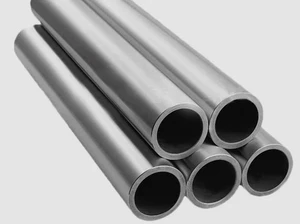
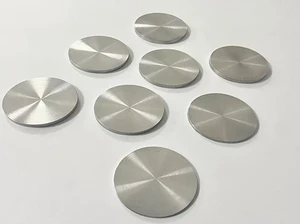
Product Forms: Titanium tubes and pipes (seamless and welded), sheets and plates, bars and rods, flanges, fittings (elbows, tees, reducers), and custom CNC-machined components-26
Custom Fabrication: Precision machining, welding, and assembly services tailored to your engineering drawings and service conditions
Our manufacturing facility operates under ISO 9001 certification, with full material traceability and mill test reports provided for every shipment-30. We have successfully supplied titanium products to the petrochemical, oil and gas, marine and offshore, and water treatment industries worldwide.
Whether you are designing a new offshore platform, upgrading existing seawater systems, or sourcing subsea components, titanium is the material that delivers over the long haul. Contact us today to discuss your marine engineering requirements.